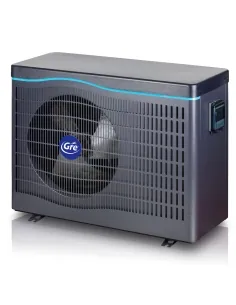
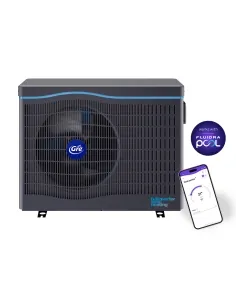
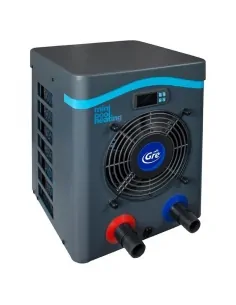
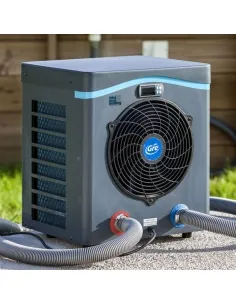
Swimming pool heat pumps: everything you need to know
Heat pumps are an excellent solution for keeping pool water at a comfortable temperature. There are different types of heat pumps for swimming pools on the market, each with specific characteristics that adapt to the needs and budget of each one. In addition to heat pumps, there are other systems for heating pool water, such as solar collectors, solar heating systems and electric heaters. There is also a wide variety of products and solutions for pool maintenance and heating, from automatic and electric pool cleaners to saunas, spas and heated covers. In this article, we will talk in depth about pool heat pumps, their different types, how to choose the best one for your pool, installation and maintenance, and other ways to heat pool water.
Swimming pool heat pumps: what are they and what are they used for?
Pool heat pumps are one of the most efficient and environmentally friendly options for keeping pool water at a comfortable temperature. Important details such as what they are, how they work and what these pumps are used for are explained below:
What is a heat pump?
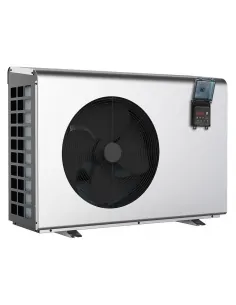
A heat pump is a device that extracts thermal energy from air or water and transfers it to another medium to generate heat. These devices are similar in operation to a refrigerator, but in reverse. The heat pump for swimming pools works by means of a compressor, which is in charge of compressing and decompressing a refrigerant gas, in order to extract from the outside air the necessary energy to heat the water of the swimming pool and bring it to the desired comfortable temperature.
How does a swimming pool heat pump work?
The heat pump for swimming pools works thanks to a closed circuit that is responsible for extracting thermal energy from the air or water to heat the pool water. This circuit is composed of a compressor, an evaporator, a condenser and an expansion valve. The compressor is responsible for increasing the pressure of the refrigerant gas, which increases its temperature. This gas is conducted to the condenser, where the thermal energy carried by the gas is released, which is transmitted to the water circulating through the pump, thus raising its temperature.
What is a swimming pool heat pump for?
Swimming pool heat pumps are used to maintain the pool water at a comfortable temperature, regardless of the time of year or the geographical region where it is located. Thanks to this device, it is possible to enjoy the pool for longer and get the most out of it in areas with colder climates, since its operation allows heating the water to higher temperatures than those obtained through solar energy.
Types of heat pumps for swimming pools
There are different types of pool heat pumps on the market, each with its own characteristics and advantages. In this section we are going to talk about some of the models currently available:
Full Inverter Heat Pumps
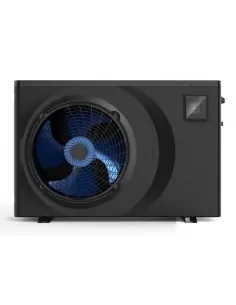
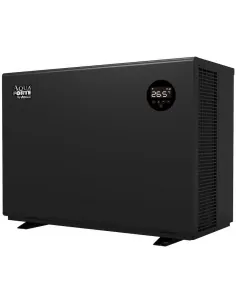
Full Inverter heat pumps are highly efficient devices that can save up to 30% energy compared to standard heat pumps. This is because they have a compressor and fan that adjust their speed depending on the outside temperature and heat demand. Thus, the heat pump consumes only the energy needed to maintain the desired pool temperature. In addition, the Inverter system reduces noise and increases the lifetime of the heat pump.
Heat pumps Hayward
Heat pumps Hayward are a popular choice in the market due to their energy efficiency and low maintenance. They are designed to withstand the most extreme weather conditions, making them ideal for cold climates. In addition, heat pumps Hayward are equipped with a high-efficiency rotary compressor that reduces energy consumption and noise.
Heat pumps Zodiac
Heat pumps Zodiac are renowned for their energy efficiency and durability. They feature inverter technology that allows for reduced power consumption and prolongs the life of the heat pump. In addition, they include a digital controller that facilitates the monitoring and programming of the pool temperature.
How to choose the best heat pump for your pool?
Before buying a heat pump for swimming pools, it is important to take into account certain aspects that will help to choose the best option for each particular case. The following are the most relevant factors to take into account when choosing a heat pump for swimming pools:
What should you consider when buying a swimming pool heat pump?
- Pool size: It is important to know the dimensions of the pool to choose a heat pump with the right power to heat the water.
- Geographical location: The climate of the area where the pool is located influences the choice of heat pump. If it is located in a cold area, a heat pump with higher capacity and efficiency will be needed.
- Use of the pool: The frequency of use of the pool will influence the choice of the heat pump. A pool for daily use should have a more powerful and efficient heat pump than a pool for sporadic use.
- Price: The available budget is an important factor when deciding which heat pump to purchase.
Which pool heat pump brand to choose?
There are several brands on the market that offer heat pumps for swimming pools, among them are:
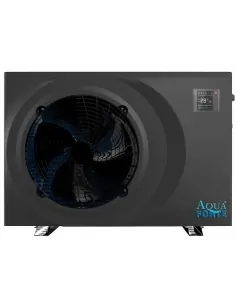
- Aquaforte Full Inverter: This brand offers efficient and high quality heat pumps. In addition, its Inverter technology allows energy savings by adapting the compressor speed to the demand of each moment.
- HPO of ZodiacIt is a high-end heat pump, with great capacity to heat large volumes of water.
- HaywardOffers energy-efficient, high-performance heat pumps.
- Aquasphere of Astralpool: Astralpool is a Spanish company of great international prestige in the manufacture of all types of pool products and construction systems. Compatibility with different types of pools and its reliability make it a brand with quality guarantees.
How to calculate the required power of the heat pump for swimming pools?
The calculation of the necessary power of the heat pump for swimming pools is made based on the average ambient temperature of the area where the pool is located and the volume of water in the pool. It is also important to take into account factors such as the number of hours of use and the time of year in which you want to use it. There are many online calculators that allow you to make this calculation easily, but it is always advisable to consult a professional to avoid mistakes and choose the most appropriate heat pump.
Installation and maintenance of heat pumps for swimming pools
How to install a heat pump for swimming pools?
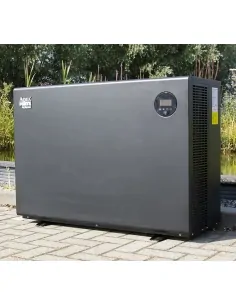
The installation of the heat pump for swimming pools must be carried out by a qualified professional, who ensures a correct electrical and piping connection. In addition, it is important to take into account the location of the outdoor unit and its correct fixing. The following are the steps to follow for the installation of a swimming pool heat pump:
- Select the right location for the heat pump according to the needs and available space.
- Connect the indoor and outdoor unit through the piping and/or electrical wiring.
- Charge the system with the proper coolant.
- Perform the necessary tests to ensure the correct operation of the heat pump.
How to maintain and clean the pool heat pump?
To keep the pool heat pump in good condition and extend its life, it is important to perform regular maintenance. This maintenance may include the following aspects:
- Periodic cleaning of air filters.
- Check coolant level and top up if necessary.
- Checking the condition of piping and electrical connections.
- Checking the condition of the outdoor unit and cleaning it.
- Checking the condition of the indoor unit and cleaning it.
What problems can arise with the swimming pool heat pump and how to solve them?
Some of the most common problems that can arise with the pool heat pump are as follows:
- Failure to turn on or off automatically.
- Loss of pool water heating efficiency.
- Problems in water circulation.
- Failure in the defrosting system.
- Noises coming from the outdoor or indoor unit of the heat pump.
In order to solve these problems, it is advisable to go to a qualified professional who can carry out an inspection and repair possible faults. In case the problem is minor, certain actions can be carried out, such as checking the water temperature, cleaning the filters or checking the electrical connections. In any case, it is important to make sure that the pool heat pump always works safely and correctly.
Other ways to heat the pool water
Solar collectors for swimming pools
Solar collectors are a simple and economical method of heating pool water. They consist of solar panels that are installed on the roof or in a place close to the pool and connected to the water treatment plant by pipes. The water is pumped through the panels, where it is heated by solar energy, and returns to the pool to keep it warm. It is important that the collectors are exposed to the sun for most of the day to be most effective.
Solar pool heating
A solar pool heating system uses solar panels to heat the pool water. This is a more complete method than solar collectors, as it can be programmed to keep the pool temperature constant throughout the day. This system requires a higher initial investment and a more complex installation than solar collectors.
Electric pool heaters
Electric heaters are a fast and efficient way to heat pool water at any time of the day. They work by means of electrical resistances and can be installed in a fixed or portable way. Although they are simple to operate, they consume a lot of energy and can add a lot to your electricity bill if used frequently.
Heat exchangers for swimming pools
Heat exchangers are a way of harnessing heat from an external source to heat pool water. The operation is simple: the exchanger is connected to the gas boiler or central heating system of the house and uses the heat generated by these systems to heat the pool water. They are very efficient systems, but require a more complex installation than the previous methods.
Other products for pool heating and pool maintenance
Thermal and safety covers for swimming pools
Thermal covers are an effective option for keeping pool water warm. They help reduce evaporation, which means less water and chemical consumption. They also protect the pool from impurities and prevent it from getting dirty. Safety covers, on the other hand, are a solution to avoid accidents, as they prevent children from entering the pool without supervision. They also prevent leaves or dirt from falling into the pool when it is not in use.
Automatic and electric pool cleaners for swimming pools
Pool cleaners are essential tools for efficient pool cleaning. Automatic pool cleaners are connected to the suction inlet or skimmer and run through the entire pool sucking up the dirt. Electric pool cleaners, on the other hand, have an electric motor and control unit, which allows them to operate without being connected to the pool's filtration system. They are more efficient and can be programmed to clean at specific times.
Dehumidifiers for swimming pools
Humidity is a common problem in environments near swimming pools, and a dehumidifier is the ideal solution to reduce it. Dehumidifiers help keep the air dry and reduce the proliferation of fungi and bacteria, which in turn improves air quality and prevents health problems. They also protect furniture and walls from moisture and mold.
Saline chlorinators for swimming pools
Salt chlorinators are an alternative to traditional chemicals to keep pool water clean and clear. They work through a process of electrolysis, converting salt into chlorine to kill bacteria and other microorganisms. The benefits of using salt chlorinators are the reduction in the amount of chemicals used and the elimination of the characteristic odor of chlorine. In addition, they are easy to use and environmentally friendly.
Spa and sauna: accessories for pool relaxation
Saunas for swimming pools
Pool saunas are an excellent choice for those who wish to relax after a swim in the pool. These saunas can be built in different sizes and shapes and are perfectly adapted to the pool environment. The most popular saunas are wood saunas, which are heated with a wood-burning or electric stove, although infrared saunas can also be found. In addition, some saunas have exterior windows that allow a spectacular view of the pool or garden.
Swimming pool spas
Pool spas are an excellent option for relaxing in the garden or pool. Spas are designed to massage different parts of the body and can be customized according to the customer's preferences. Spas come in different shapes and sizes, from small enough for two people to large enough for the whole family. In addition, some brands offer additional accessories, such as water fountains, LED lighting and sound systems to create a relaxing atmosphere.
Swimming pool lighting and waterfalls
Pool lighting and waterfalls are an excellent option to add a touch of elegance and sophistication to the pool environment. LED lighting is a popular way to illuminate the pool, as it is energy efficient and can change color according to the user's preference. Waterfalls are also popular, as they not only add an interesting visual feature but can also act as a relaxing sound source. In addition, there are different types of waterfalls, from those that are designed to keep the water moving to those that have a water curtain effect.
- Saunas and pool spas are an excellent choice for relaxing in the garden or pool.
- The spas are designed to massage different parts of the body and can be customized according to the client's preferences.
- LED lighting is a popular way to illuminate the pool, as it is energy efficient and can change color according to the user's preference.
- Waterfalls are also popular, as they not only add an interesting visual feature but can also act as a relaxing sound source.